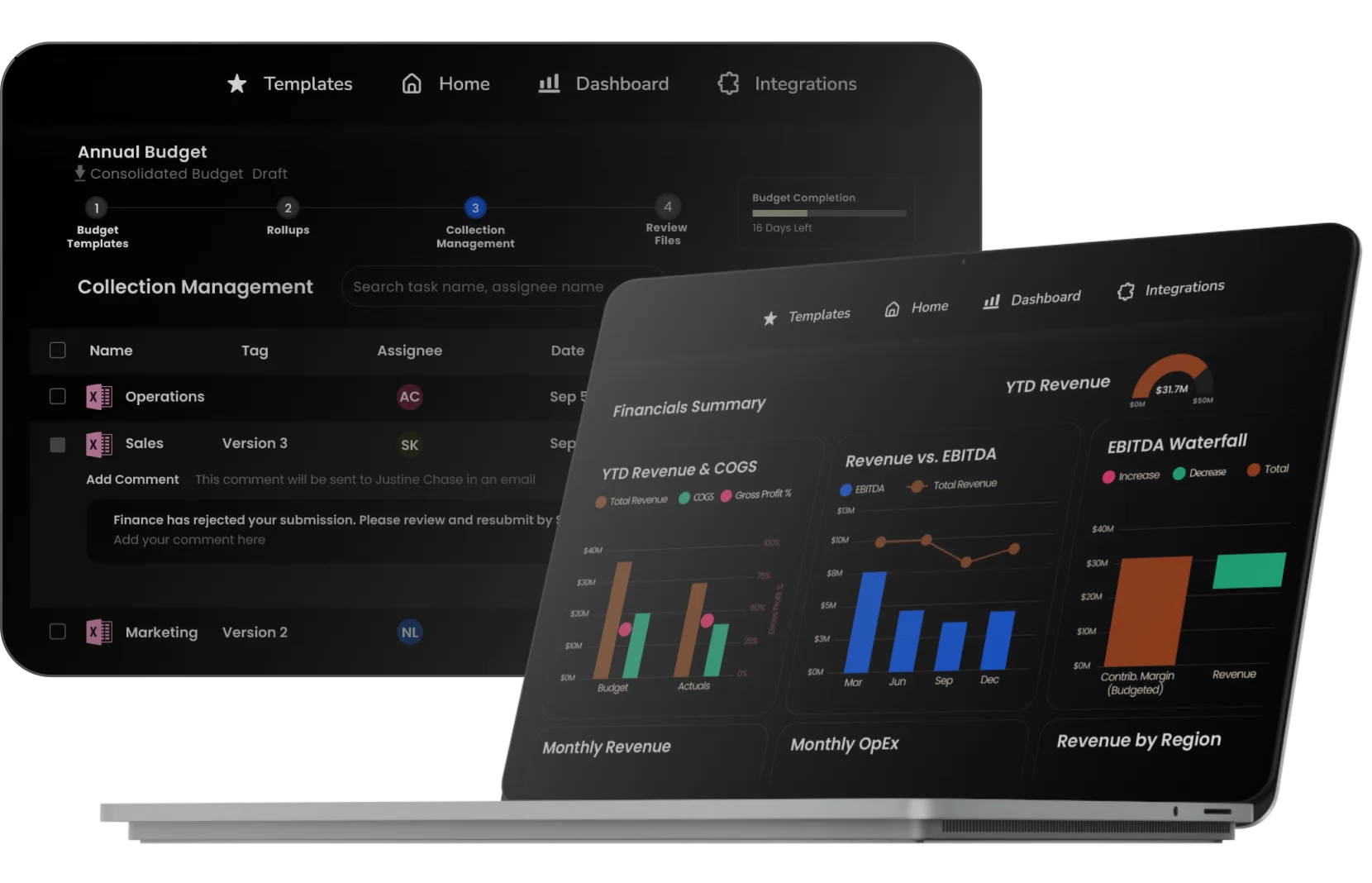
22% More Paid Conversions with AI-Powered Visual Production
85%
Faster history loads86%
Fewer system errors22%
More paid conversions
Client Overview
Business Problem
Situation Before
Core Pain
Risks
- Up to 30% of potential revenue lost in the first weeks of a trend due to slow content production
- Continued GPU resource waste from unvalidated low-quality source images (~25% defect rate)
- No subscription or credit system meant no path to scalable, recurring revenue.
- Infrastructure instability and missing queue management threatened platform reliability at any meaningful user volume
Constraints
- Backend response time during generation status processing could not exceed 500 ms (strict UX latency SLA)
- Legacy monolithic module could not be decommissioned until all users were migrated, backward compatibility required throughout
- Compressed time-to-market: financial core and subscription system had to be ready before the e-commerce peak season
- ComfyUI worker node API changes or library updates could interrupt active generation queues at any time.
Project Goals
- Set up automated image production that scales without relying on photo studios.
- Add a full monetization layer with subscriptions, credits and pay-as-you-go options to lift LTV and bring in recurring revenue.
- Cut the lead time for launching new product collections and shipping AI workflow updates.
- Catch defective source images before they enter the pipeline so GPU cycles are not wasted on unusable inputs.
- Pre-validate source images to prevent defective inputs from consuming GPU resources.
- Pre-validate source images to prevent defective inputs from consuming GPU resources.
- Pre-validate source images to prevent defective inputs from consuming GPU resources.
- Pre-validate source images to prevent defective inputs from consuming GPU resources.
- Backend latency for generation status stayed under 500 ms.
- System error rate dropped from over 15% toward under 2%.
- Generation history load time fell well below the 3.5 second baseline.
- Financial transactions ran at 100% accuracy, with no race conditions on coin balances.
- New AI workflows could be deployed independently of the main release cycle.
Solution
The Microservices used HTTP sync calls for Auth, Billing and Orders as well as RabbitMQ asynchronous queues to decouple ComfyUI generation from the core backend. The legacy backend-ab was packaged in an Adapter microservice to preserve ML capabilities while migrating. Cleaning, reporting and statistics were scheduled using Kubernetes CronJobs. Backend-ab circuit provided GenAI engineers with an isolated environment to develop ML processes without affecting Production Release Cycles.
Backend-prod managed user flows in the Business Logic cluster, where ComfyUI workflows went through A/B testing and a pre-validation service that checked the metadata, resolution and masks before GPU execution. Financial Core had coins-service with DB-level locking, subscription-service, payment-service and order-service. Infrastructure included JWT/OAuth2 authentication for web and Telegram, S3 proxy for content delivery, CRM sync for marketing events and CronJobs.
Using AWS as its cloud service provider, the platform stored data in S3, used RDS for relational database storage and deployed applications on an EKS. All of the Platform's services were created with Docker, deployed using Kubernetes and had CronJob resources created to run periodic jobs. GitLab was used as the source code repository and CI/CD tool to automate build and deployment tasks. All background jobs were processed by a RabbitMQ message broker and a Celery task queue was used to manage them. This architecture provided a stable foundation and reproducible system for scaling purposes.
Unified JWT/OAuth2 authentication was implemented in both web and Telegram clients. DB-level locking prevented race conditions with financial transactions. Pre-validation service rejected invalid or low-quality images prior to GPU pipeline processing. Canary deployments restricted the blast radius of new releases; RabbitMQ had a Circuit Breaker to prevent cascading failures from GPU worker overloads. Key design decisions were managed using ADRs with mandatory code reviews requiring minimum 1 approval before any merge.
Key Steps
Codebase audit of legacy scripts, requirements capture with client, ADR framework setup, Scrum process initialization, Jira configuration, architectural decision to split microservices into three functional clusters.
Microservices topology finalized, financial cluster schema designed (coins, subscriptions, orders), ComfyUI async pipeline prototyped, DB-level locking strategy validated for balance operations, auth service (JWT/OAuth2 + Telegram) scaffolded.
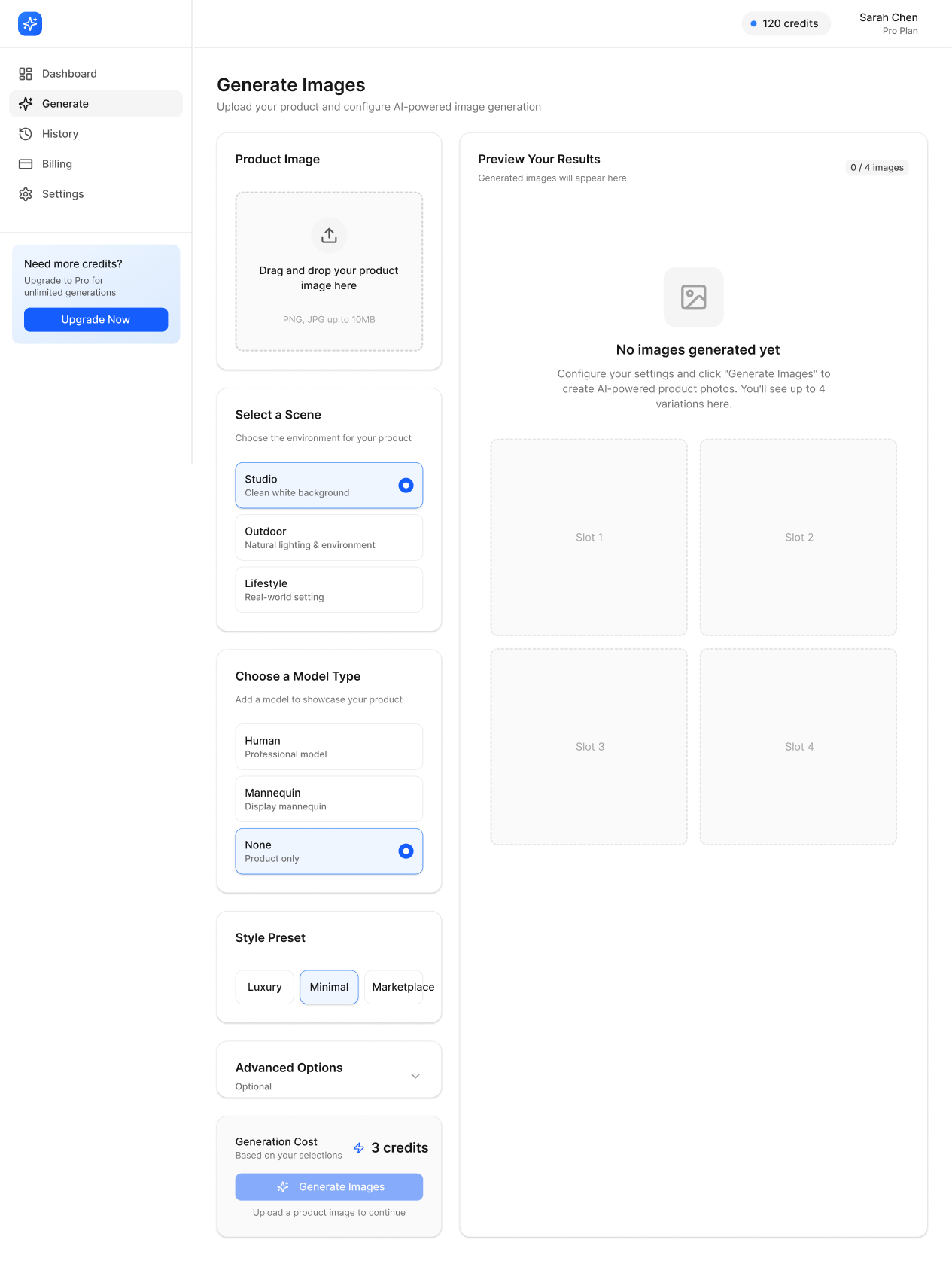
Core backend-prod orchestration service delivered, coins-service and payment-service live with webhook processing, subscription and trial logic implemented, pre-validation service (resolution, metadata, mask checks) integrated before GPU submission, S3 proxy layer for generated content delivery, frontend dashboard and generation UI shipped.
Backend-ab isolated instance deployed for A/B testing new ComfyUI workflows without production risk, Kubernetes CronJobs live for data cleanup and stats recalculation, CRM integration (crm-actions) syncing registration/payment/churn events, error rate driven from 15% to under 2% through pipeline hardening and retry logic.
Generation throughput optimized 5×, history load time reduced 80%, order-service ledger live for analytics dashboards, full regression coverage by QA, CI/CD pipeline hardened on AWS, trial-to-paid conversion lift of 22% confirmed in analytics.

Results & Impact
Project Snapshot
See Other Works
Secure LLM Gateway for a 63,000-Person Enterprise
Secure enterprise AI access with centralized governance, lower latency, content controls, and full token usage visibility

Bond Settlement Cut from 2 Days to 30 Minutes
End-to-end capital markets platform automating bond issuance, trading, settlement, and investor servicing

API Response Time Down 80% for a Bloomberg Rival
Financial analytics platform delivering real-time market data, news processing, and scalable backend services for fintech